Choosing a restaurant shouldn't come down to luck
Every platform is confident, and they all disagree. Instagram calls it the best in the city. TikTok has something more unmissable. On Maps everything is a 4.8. The group chat says "didn't love it, try another."
You end the search with more doubt than you started with. Sello is built on the opposite premise: fewer places, checked, with the reasoning visible.
Why ratings stopped meaning anything
When every restaurant scores 4.8, the score has stopped carrying information.
- Compressed scales. Public ratings cluster so tightly at the top that they no longer separate good from great.
- No provenance. A number arrives with no way to see who said it, or when.
- Volume over judgement. Reach rewards whatever is loudest this week, not what holds up.
- Nothing decays. A place coasts on a reputation it earned three years ago.
Four ingredients, one score
The Sello Score is deliberately not a single source. It combines four, so that no one of them can be gamed alone.
Curation
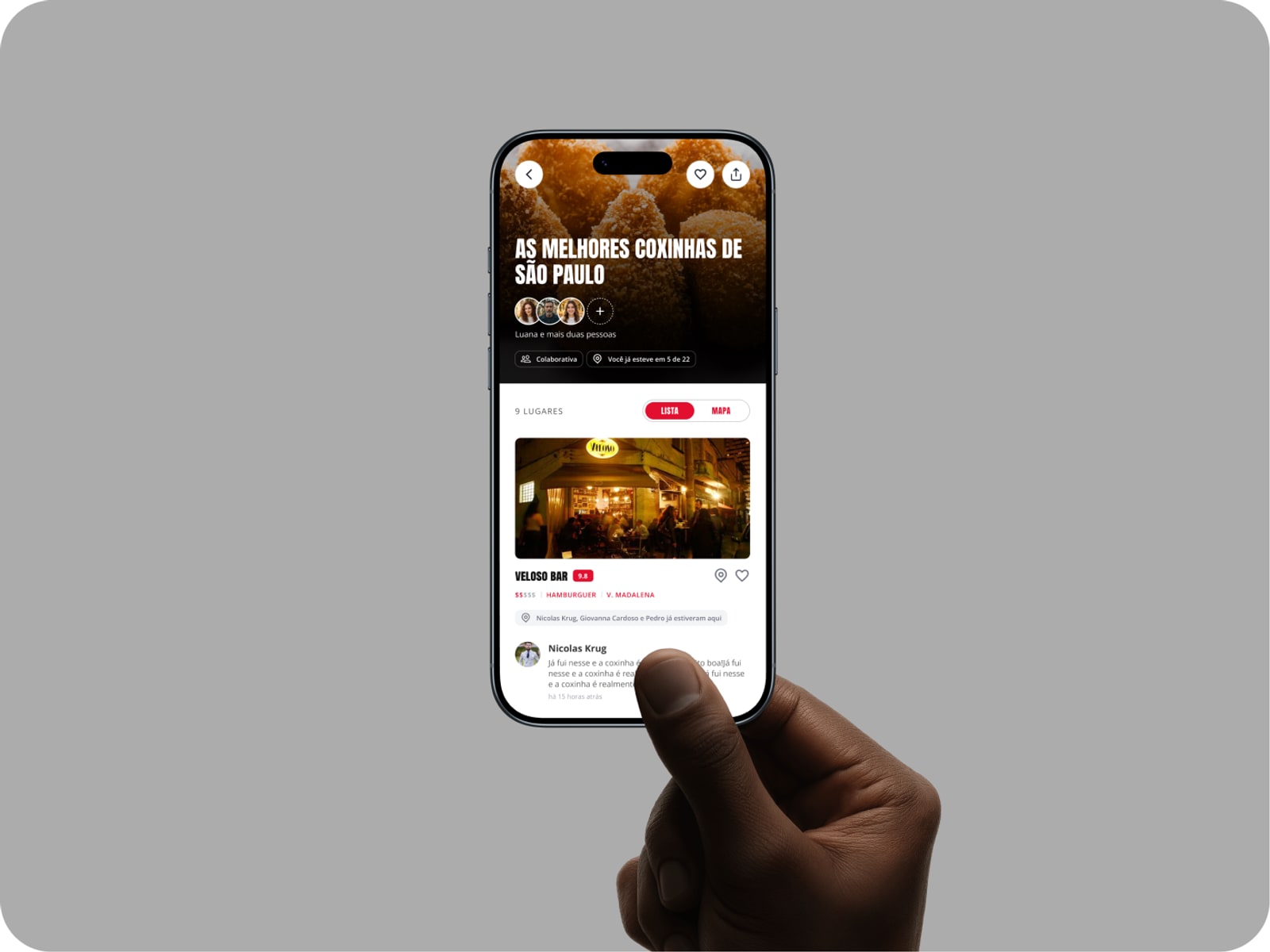
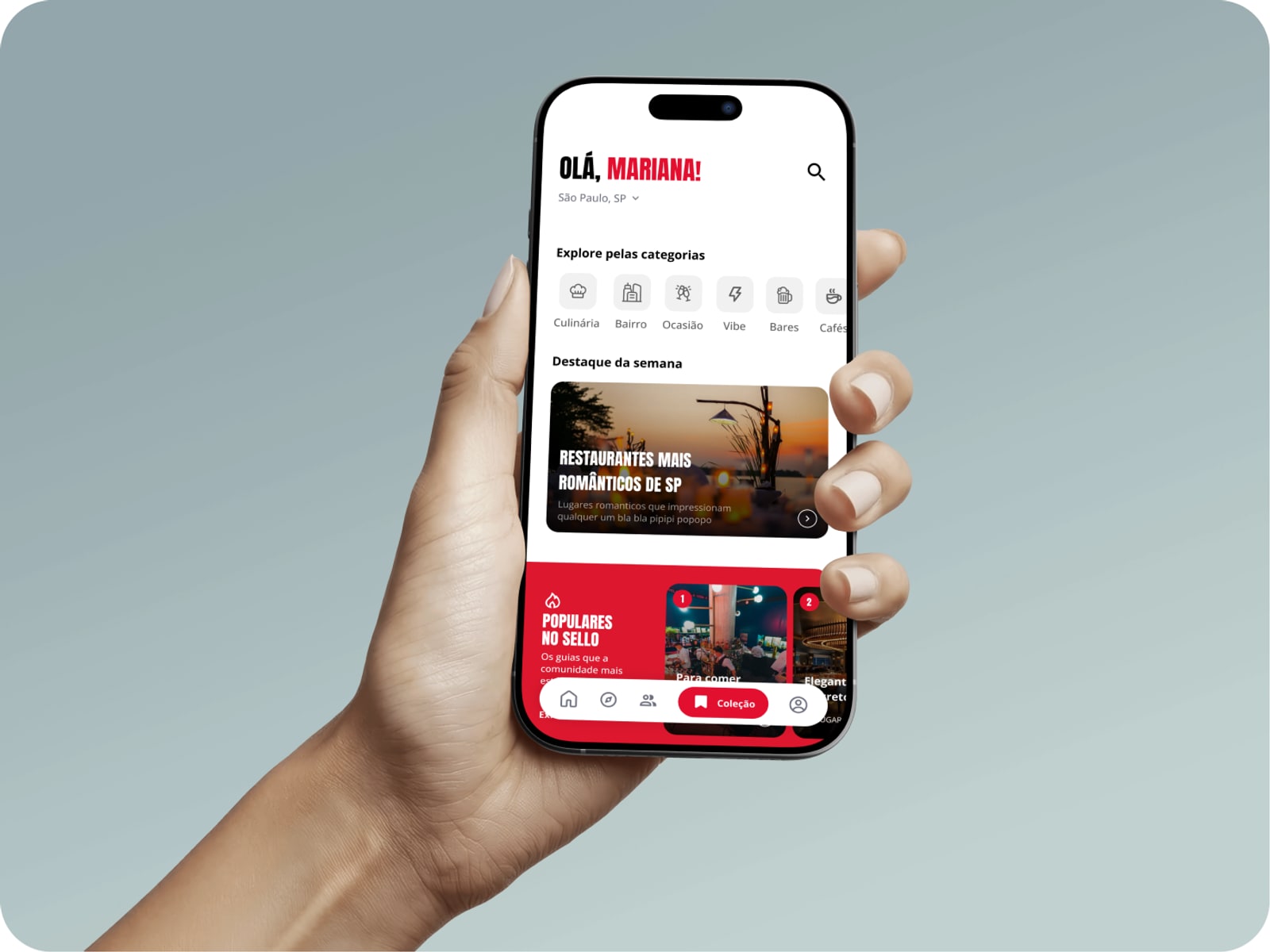
Not every restaurant gets in. The team researches, visits and selects — fewer recommendations, but the right ones.
Community
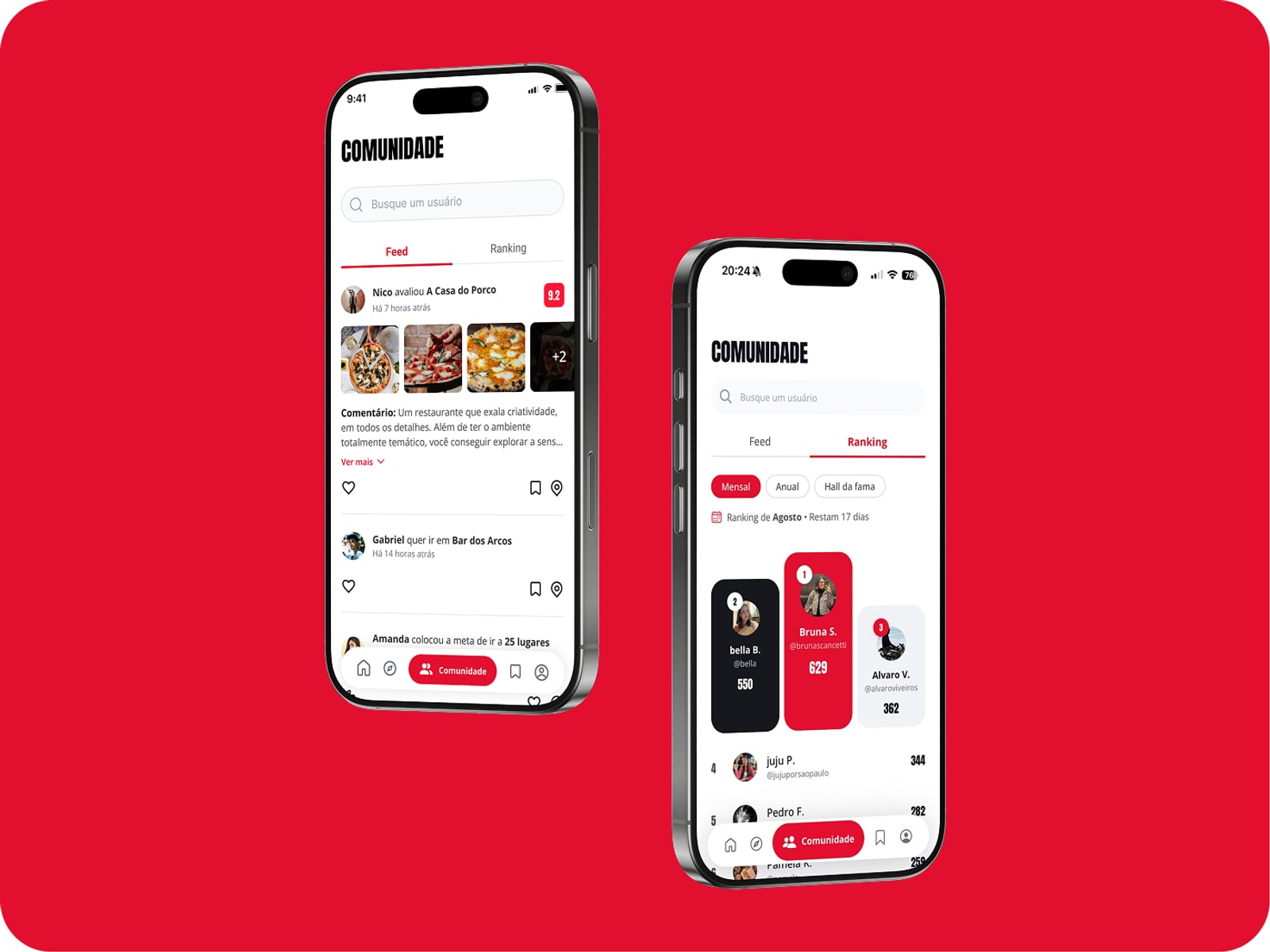
The people who actually went keep it current, showing how a place delivers in practice.
Recognition
Reviews, awards and industry lists — the trail a good restaurant leaves behind.
Sello intelligence
The layer that reads all of the above and turns scattered signals into one number that can be explained.
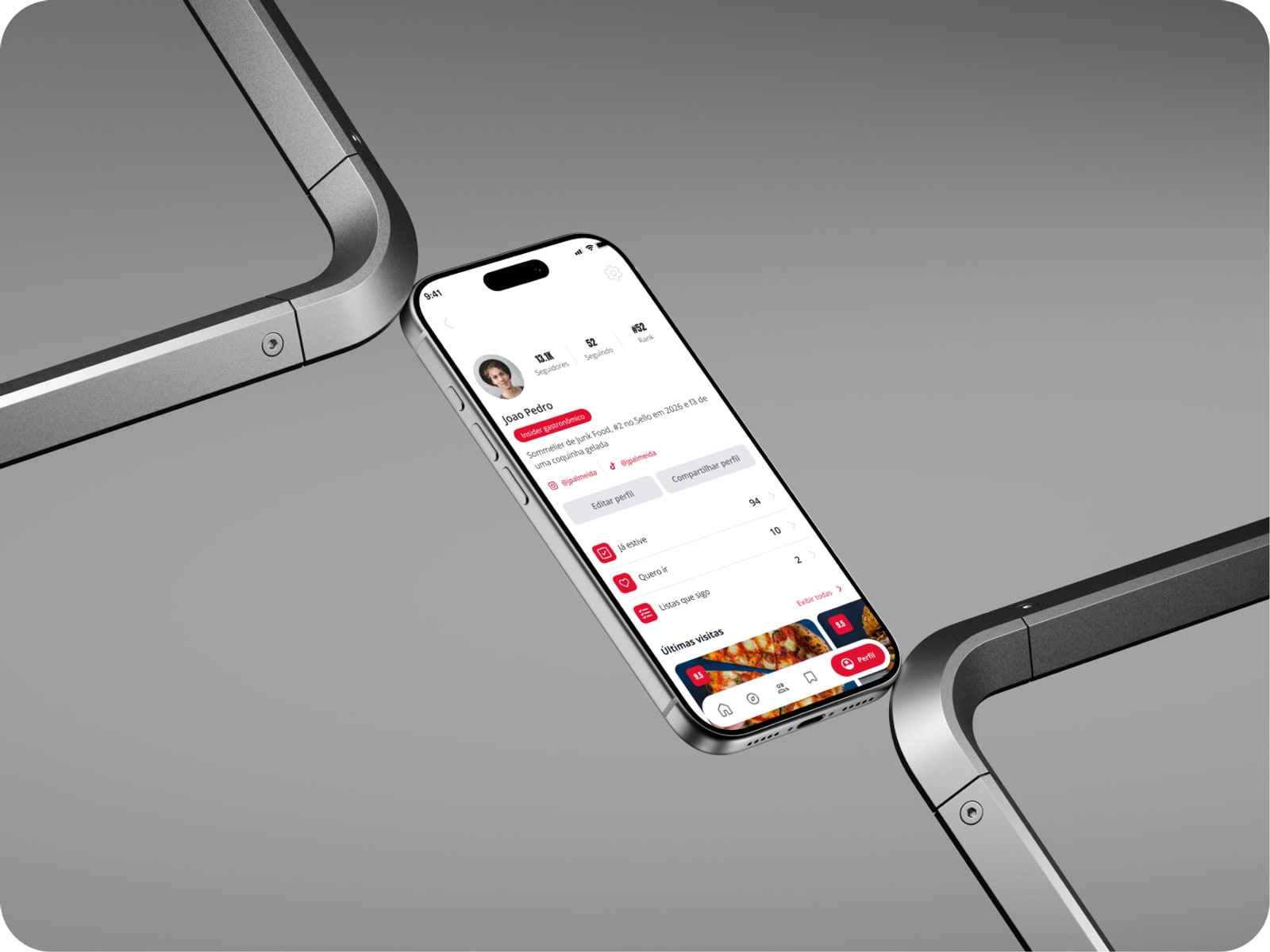
Four things you can do
Each one feeds the next: discovery produces opinions, and opinions improve discovery.
Mesa DS — the system underneath
A product this size does not hold together on screens alone. Sello runs on its own design system, Mesa DS, aligned to Apple's Human Interface Guidelines and carried from Figma into production code as a single source of truth.
Token architectureSeven token families — colour, typography, spacing, shape, elevation, motion and state — rather than one flat palette. Every colour is defined for light and dark at the same time, so a theme is a property of the token, not a second set of screens to maintain.
- Semantic over literal. Tokens are named for their job, not their value: surface, surface-2, fill, separator, label-2, label-3. Changing a hue never means renaming a component.
- One definition, three consumers. Tokens resolve to CSS variables, Tailwind classes and a useThemeColors() hook, so design and code cannot drift apart without the drift being visible.
- Constraints encoded, not remembered. Minimum tap target lives in the system as a value components read, instead of a rule someone has to recall in review.
Mesa DS ships with its own documentation surface inside the app — colour swatches, type specimens, spec tables and live example frames. Documentation that sits next to the code is documentation that survives the next release; a spec deck in a folder does not.
The system is what let one designer ship and keep shipping a consumer product on two platforms. It is also where most of the design decisions actually live — the screens are just where you can see them.
Trade-offs
- Coverage × trust. Chose the smaller catalogue. A curated app that lists everything is just a directory with better typography.
- Discovery × booking. Sello deliberately does not take reservations. Owning the decision is a different product from owning the transaction.
- One city × many. São Paulo first. Curation does not scale by copy-paste — it scales when a city has enough people to keep it honest.
- Cold start. Editorial curation carries the experience before there is enough community signal to carry it.
What I carry forward
- A score is worth what its provenance is worth. Explaining where it came from beats one more decimal place.
- Curation is a product decision with a cost. Saying no to restaurants is what makes the yes mean something.
- Rewarding usefulness instead of volume changes who shows up. Incentives are interface.
- Shipping to two app stores is a design constraint, not a handover. The work does not end at the prototype.
Where it stands
Live on the App Store and Google Play, launched in São Paulo.